> For the complete documentation index, see [llms.txt](https://x.ancorasir.com/llms.txt). Markdown versions of documentation pages are available by appending `.md` to page URLs; this page is available as [Markdown](https://x.ancorasir.com/des5002/des5002-or-spring-2024/readme.md).

# DES5002 Designing Robots for Social Good

Spring 2024

## Course Description

This course exemplifies the technical and ethical guidelines in designing robots for social good. The course introduces the principles, materials, design, and modeling of robotic agents for physical interactions with the environment, helping students understand the basic concepts and core technologies of robotics. The course further takes a theme-based and case-driven approach to help students identify the key factors in designing robots for social good and practice them in a design challenge.

## Learning Outcomes

At the end of this course, students will be able to:

1. Conduct analysis of robotic systems in terms of technical and ethical aspects.
2. Adopt advanced technologies in designing robotic systems.
3. Demonstrate ability to align technical and ethical guidelines in designing robots for social good.

## Content Summary

The course covers robotics and social good, generative design, soft robotics, human–machine interaction, data and machine learning, and AI applications in sound, image, text and body. Case-study workshops, guest lectures, tutorials and reviews support a team project on humanoid robots and their applications for social good. The Reachy Fusion project uses Autodesk Fusion 360 for design analysis and asks teams of three to communicate hardware design and applications using robotics and large language models.

## Course Instructor & Teaching Team

* Lead Instructor: Dr. Wan Fang
* Teaching Assistant: Zhong Bocheng
* Office: Level 3, Zhiyuan

## Grading Policy

* (10%) Attendance
  * To be recorded during each class by Teaching Assistants.
* (20%) Assignment
  * To be submitted before Apr 8, 23:30, online.
* (20%) Project: Team Poster 1 on the Design of a Humanoid Robot
  * Explain the design process and working principle of your team’s humanoid robot, focusing on the hardware.
  * Formulate and explain a step-by-step assembly for your team’s robot (optional)
  * 3D models (optional)
* (50%) Project: Team Final Poster on the Design of Humanoid Application for Social Good
  * Propose using robotics and LLMs for Social Good by designing humanoid robot applications, focusing on the user, scenario, and interaction.
* In your final presentation, present the work the team has done, including
  * formulate a project team of 3 students and explain your design tasks
  * explain the design and working principle of your team’s humanoid robot
  * formulate and explain a step-by-step assembly for your team’s robot (Optional)
  * propose the use of robotics and LLMs for Social Good

## Academic Integrity

This course follows the SUSTech Code of Academic Integrity. Students are expected to abide by that code. Work submitted by a student for academic credit must be the student's own work. Violations, including cheating, copying and non-approved collaborations, will not be tolerated.

## University Calendar

![](https://1412232870-files.gitbook.io/~/files/v0/b/gitbook-x-prod.appspot.com/o/spaces%2FRBFPTFCIac2nAXXXniyA%2Fuploads%2Fgit-blob-0dee0819841853fd0bb83d8e23e01aa989ab00b5%2Funiversity-calendar-2024-spring.webp?alt=media)

## Recommended Textbook(s)

1. Ethically Aligned Design: A Vision for Prioritizing Human Well-being with Autonomous and Intelligent Systems.
2. Designing Robots, Designing Humans.
3. [Soft Robotics Toolkit](https://softroboticstoolkit.com/).
4. Coyle, Stephen, et al. “Bio-inspired soft robotics: Material selection, actuation, and design.” Extreme Mechanics Letters 22 (2018): 51–59.

## Teaching Schedule

[**Class 01: Introduction to Robots**](https://files.gitbook.com/v0/b/gitbook-x-prod.appspot.com/o/spaces%2FRBFPTFCIac2nAXXXniyA%2Fuploads%2Fgit-blob-a9a4deca94c7ccfe9e2f5c95a74d31c13abd6387%2FWeek-01-Lecture-01-Introduction-to-Robots.pdf?alt=media) **|** Mon Feb 19, 1400–1550

[**Class 02: The Rise of Robotics and AI**](https://files.gitbook.com/v0/b/gitbook-x-prod.appspot.com/o/spaces%2FRBFPTFCIac2nAXXXniyA%2Fuploads%2Fgit-blob-5cdc62d37bef6c235741dc506a09d80cd2a67a23%2FWeek-01-Lecture-02-The-Rise-of-Robotics-and-AI.pdf?alt=media) **|** Fri Feb 23, 1020–1210

[**Class 03: What is Social Good?**](https://files.gitbook.com/v0/b/gitbook-x-prod.appspot.com/o/spaces%2FRBFPTFCIac2nAXXXniyA%2Fuploads%2Fgit-blob-9732f70ac6a5db0c30502d38cd86d61388b972d6%2FWeek-02-Lecture-03-What-is-Social-Good.pdf?alt=media) **|** Fri Mar 01, 1020–1210

* *Team formation: Mar 03, 2330. Register for the Aliyun PAI platform.*

[**Class 04: Robots & AI for Social Good**](https://files.gitbook.com/v0/b/gitbook-x-prod.appspot.com/o/spaces%2FRBFPTFCIac2nAXXXniyA%2Fuploads%2Fgit-blob-0f0ad3e2dd56f43f397bb5a6e6ef04fd86503b36%2FWeek-03-Lecture-04-Robots-for-Social-Good.pdf?alt=media) **|** Mon Mar 04, 1400–1550

[**Class 05: Workshop: Design case study**](https://des5002.ancorasir.com/wp-content/uploads/2024/04/DES5002-List-of-paper-review.xlsx) **|** Fri Mar 08, 1020–1210

**Class 06: Workshop: Design case study |** Fri Mar 15, 1020–1210

* *Assignment submission in the schedule: Mar 17, 2330.*

**Class 07: Workshop by Aliyun: Introduction to ArtLab |** Mon Mar 18, 1400–1550

**Class 08: Tutorial |** Fri Mar 22, 1020–1210

[**Class 09: Generative Design Method**](https://files.gitbook.com/v0/b/gitbook-x-prod.appspot.com/o/spaces%2FRBFPTFCIac2nAXXXniyA%2Fuploads%2Fgit-blob-0d259d1ffe05b81d51da68d604455fbc8a20cfdc%2FWeek-06-Lecture-05-Generative-Design.pdf?alt=media) **|** Fri Mar 29, 1020–1210

[**Class 10: Soft Robotics I**](https://files.gitbook.com/v0/b/gitbook-x-prod.appspot.com/o/spaces%2FRBFPTFCIac2nAXXXniyA%2Fuploads%2Fgit-blob-7f99696d19c5c77d2102c423a95939cc2f01b6b4%2FWeek-07-Lecture-06-Soft-Robotics-I.pdf?alt=media) **|** Mon Apr 01, 1400–1550

[**Class 11: Soft Robotics II**](https://files.gitbook.com/v0/b/gitbook-x-prod.appspot.com/o/spaces%2FRBFPTFCIac2nAXXXniyA%2Fuploads%2Fgit-blob-31929935d2386304eeed5ef9b4c50394acedb14b%2FWeek-07-Lecture-07-Soft-Robotics-II.pdf?alt=media) **|** **Sun Apr 07, 1020–1210 (make-up class)**

**Class 12: Guest Lecture on HMI by Prof. Sun Xiaohua |** Fri Apr 12, 1020–1210

**Class 13: Workshop: Interim Review |** Mon Apr 15, 1400–1550

**Class 14: Intro to Data and ML |** Fri Apr 19, 1020–1210

**Class 15: AI + Sound |** Fri Apr 26, 1020–1210

**Class 16: AI + Image |** Mon Apr 29, 1400–1550

~~**Class 17: Cancelled: Labor’s Day |** Fri May 03, 1020–1210~~

**Class 18: AI + Text |** Fri May 10, 1020–1210

**Class 19: Guest Lecture: Robot competition by ARTINX |** Mon May 13, 1400–1550

[**Class 20: Design For Good Paper Review**](https://files.gitbook.com/v0/b/gitbook-x-prod.appspot.com/o/spaces%2FRBFPTFCIac2nAXXXniyA%2Fuploads%2Fgit-blob-03cf03f59989d7f3f637a6ca3ef5de043b57efe4%2F24Spring-DesigningRobots4SocialGood.pdf?alt=media) **|** Fri May 17, 1020–1210

* *Poster 1 on robot hardware design: May 19, 2330.*

**Class 21: AI + Body |** Fri May 24, 1020–1210

**Class 22: Tutorial |** Mon May 27, 1400–1550

**Class 23: Tutorial |** Fri May 31, 1020–1210

* *Poster 2 on robot system/interaction design with LLMs, vision or voice models: Jun 02, 2330.*

**Class 24: Final Review |** Fri Jun 07, 1020–1210

## Important Deadlines

* Team formation — Mar 03, 2330.
* Assignment submission — Mar 17, 2330 in the schedule; Apr 08, 2330 in the project brief. The archived source is inconsistent.
* Interim review — Apr 15.
* Poster 1: robot hardware design — May 19, 2330.
* Poster 2: robot system/interaction design — Jun 02, 2330.
* Final review — Jun 07.

## Project Reachy Fusion for DES5002 <a href="#block-00bae408-07a1-4273-8907-57d88899cc8c" id="block-00bae408-07a1-4273-8907-57d88899cc8c"></a>

n this project, we aim to adopt [Reachy by Pollen Robotics](https://www.pollen-robotics.com/) as the subject to practice basic concepts in mechanical design using Autodesk Fusion 360. The overall goal is to conduct a design analysis of Reachy to evaluate its engineering characteristics against its performance, use Fusion 360 as the tool for design analysis, formulate a user manual with details instructions and conclude with design recommendations for future iterations.

\[All images and videos below are reproduced from Reachy main website for educational purposes only. We hope to talk with Reachy about properly using this media content. Please contact <wanf@sustech.edu.cn> for more.]

![](https://1412232870-files.gitbook.io/~/files/v0/b/gitbook-x-prod.appspot.com/o/spaces%2FRBFPTFCIac2nAXXXniyA%2Fuploads%2Fgit-blob-5471bcc464f3173232b15e0d16d4543b2b7db65d%2Fimage-1024x515.webp?alt=media)

### About Reachy by Pollen Robotics <a href="#block-e06076a0-dca0-47a9-bbfc-0af2bfe8c53e" id="block-e06076a0-dca0-47a9-bbfc-0af2bfe8c53e"></a>

Reachy is an expressive open-source humanoid platform programmable with Python and ROS. He is particularly good at interacting with people and manipulating objects.

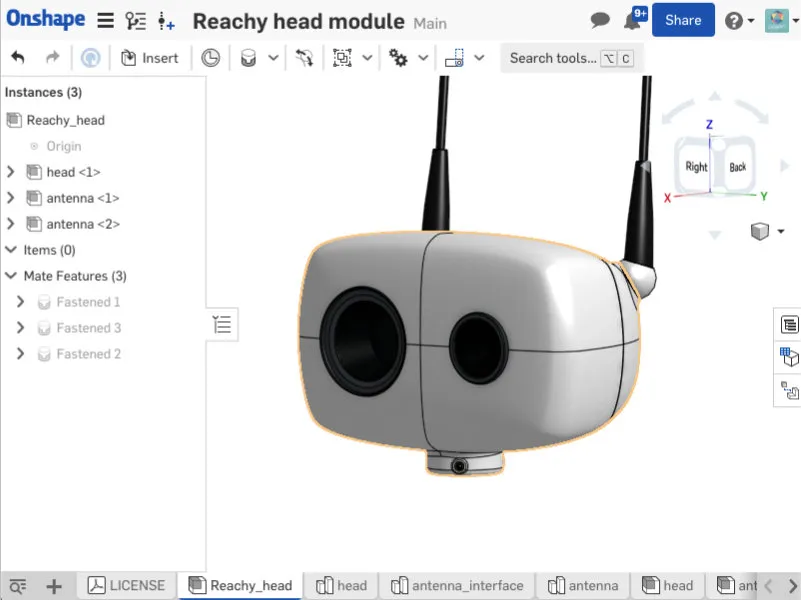
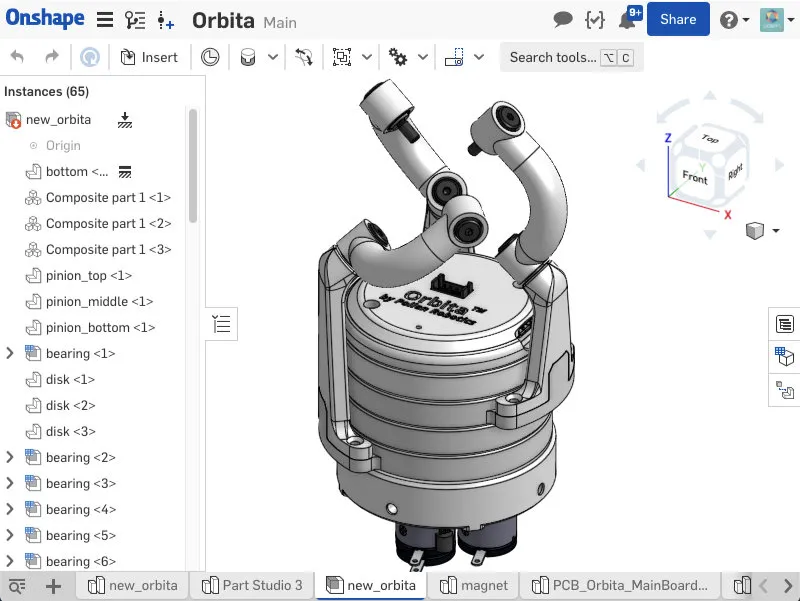
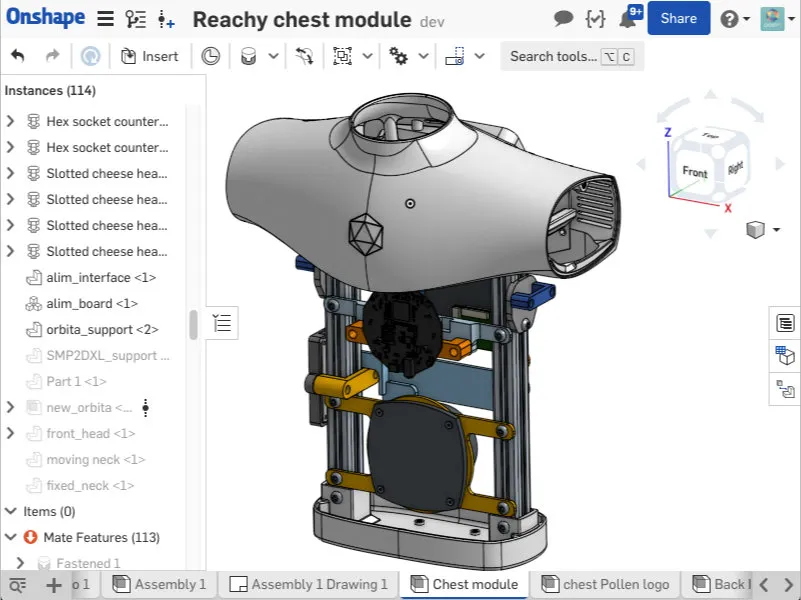
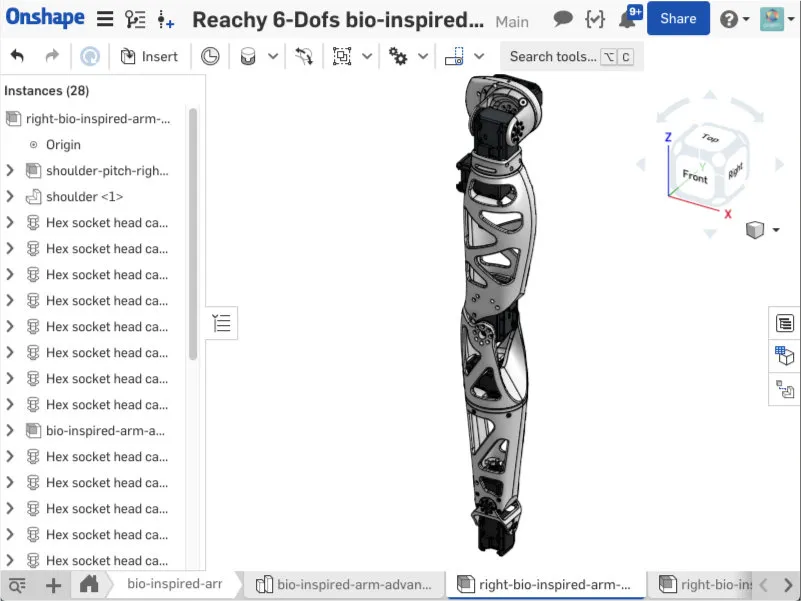
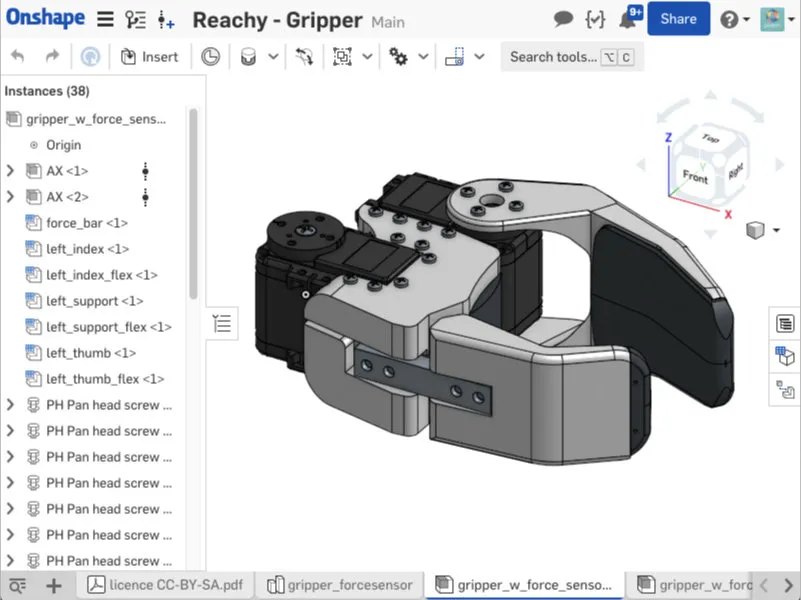
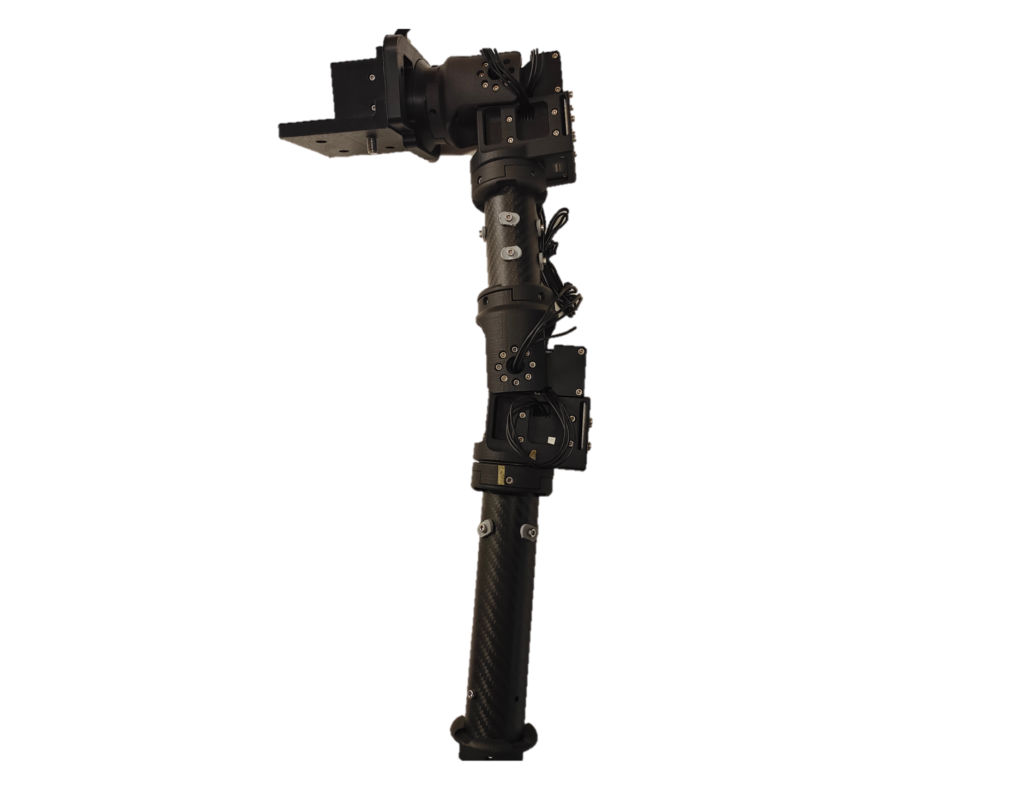
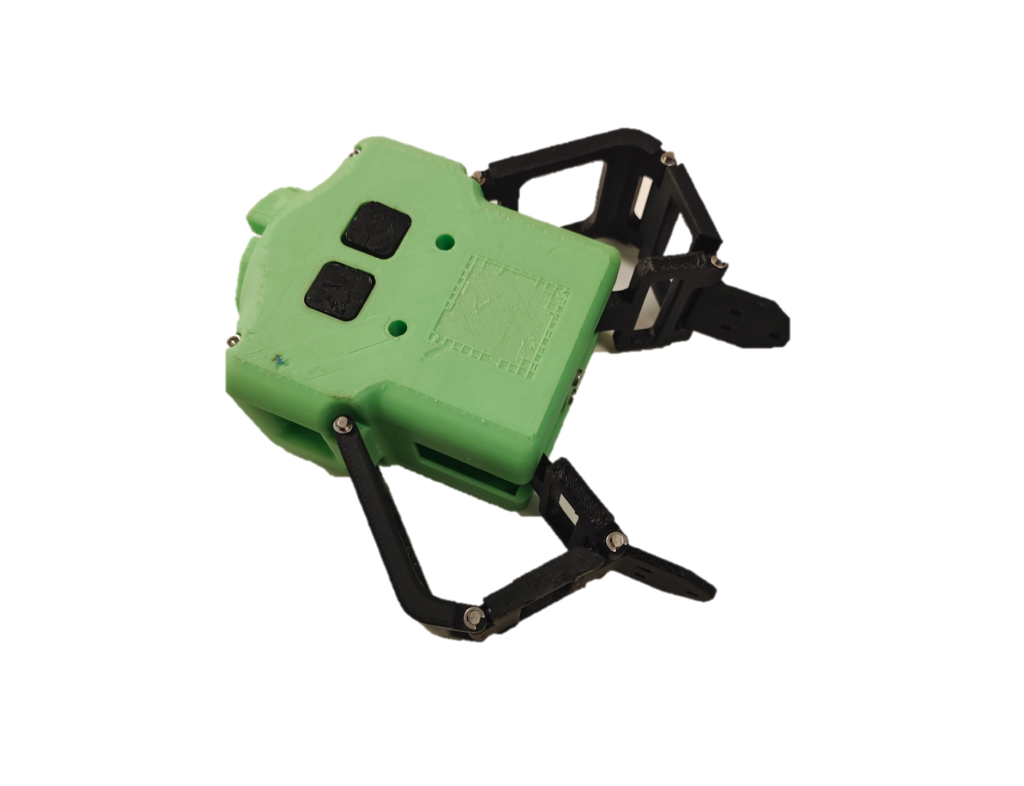
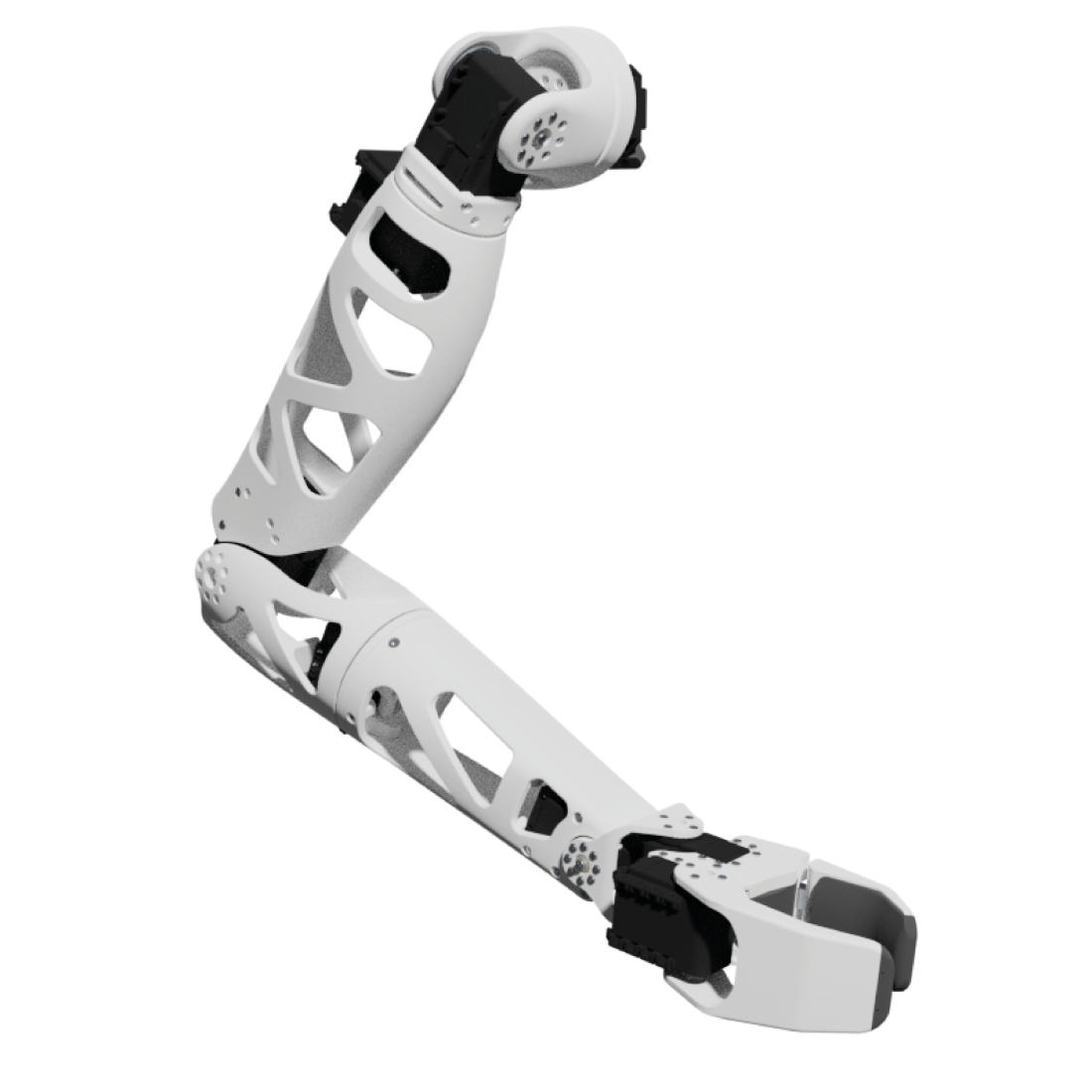
<table data-view="cards"><thead><tr><th></th><th data-hidden data-card-cover data-type="image">Cover image</th></tr></thead><tbody><tr><td><p><a href="https://cad.onshape.com/documents/5a9e7c88f6e1068df540bf7a/">Head</a></p><p>This is a relatively simple design compared to the rest of Reachy, with only two servo motors moving the antenna. It also has two vision sensors with two lenses of the same specs but different shapes from the outlook.</p></td><td><a href="https://1412232870-files.gitbook.io/~/files/v0/b/gitbook-x-prod.appspot.com/o/spaces%2FRBFPTFCIac2nAXXXniyA%2Fuploads%2Fgit-blob-73e216fb2ff7ac2ae0b84fd955c811898f4f880d%2Fonshape_head_module.webp?alt=media">onshape_head_module.webp</a></td></tr><tr><td><p><a href="https://cad.onshape.com/documents/5ca7f684d33fbcace89ad4d3/">Neck/Orbita Joint</a></p><p>This is a relatively complex design compared to the rest of Reachy, where a patented parallel mechanism is driven by three brushless motors designed in a compact form factor. It looks a bit strange but functions in a “magical” way, powered by kinematics.</p></td><td><a href="https://1412232870-files.gitbook.io/~/files/v0/b/gitbook-x-prod.appspot.com/o/spaces%2FRBFPTFCIac2nAXXXniyA%2Fuploads%2Fgit-blob-2f1acaa79fea381b63a6728d690a54c70ca230f9%2Fonshape_orbita.webp?alt=media">onshape_orbita.webp</a></td></tr><tr><td><p><a href="https://cad.onshape.com/documents/0306aa0a644dba7cf10899a8/">Trunk</a></p><p>This is the largest part of Reachy with no moving parts, but all movable parts will be connected. It houses most electronics and needs sufficient engineering rigidity, where structural analysis would be required.</p></td><td><a href="https://1412232870-files.gitbook.io/~/files/v0/b/gitbook-x-prod.appspot.com/o/spaces%2FRBFPTFCIac2nAXXXniyA%2Fuploads%2Fgit-blob-375fccd8b8474117615c89f8861079574c5e4c6f%2Fonshape_trunk_module.webp?alt=media">onshape_trunk_module.webp</a></td></tr><tr><td><p>Left <a href="https://cad.onshape.com/documents/2cd541150588bd17e3473399/">Arm</a></p><p>This is the most dexterous part of Reachy with the most degree of freedom, providing planning for physical interaction with the external environment. It houses most of the servo motors of Reachy with a large range of motion that needs to be carefully characterized and designed.</p></td><td><a href="https://1412232870-files.gitbook.io/~/files/v0/b/gitbook-x-prod.appspot.com/o/spaces%2FRBFPTFCIac2nAXXXniyA%2Fuploads%2Fgit-blob-a548774be953ce74758ffd1faebd91ab91df68f2%2Fonshape_arm_module.webp?alt=media">onshape_arm_module.webp</a></td></tr><tr><td><p>Left <a href="https://cad.onshape.com/documents/4456e4d7aa9833296dc141b2/">Gripper</a></p><p>This is the part where the dream (or simulation) comes true to affect the actual interaction with the physical environment. The challenge is to involve the least number of servo motors for maximum dexterity while dealing with the objects of various designs.</p></td><td><a href="https://1412232870-files.gitbook.io/~/files/v0/b/gitbook-x-prod.appspot.com/o/spaces%2FRBFPTFCIac2nAXXXniyA%2Fuploads%2Fgit-blob-4744b60eab59097f816025d2adcae7aec28d8d03%2Fonshape_gripper_module.webp?alt=media">onshape_gripper_module.webp</a></td></tr><tr><td><p>Right <a href="https://cad.onshape.com/documents/2cd541150588bd17e3473399/">Arm</a></p><p>In this project, your team will use an Arm prototype developed by Sun Haoran (SUSTech Mechanical Class 2016, currently a SUSTech-HKU Joint Ph.D. student at SUSTech Design and Learning Lab). We will provide a working prototype, and your task will involve providing further design optimization so that it may fit Reachy in a better way. Talk to the course instructor for further details.</p></td><td><a href="https://1412232870-files.gitbook.io/~/files/v0/b/gitbook-x-prod.appspot.com/o/spaces%2FRBFPTFCIac2nAXXXniyA%2Fuploads%2Fgit-blob-bea51ef69f2a06b0e96d815c7ad632fd0fee77ed%2FScreen-Shot-2022-08-30-at-11.35.11-1024x786.webp?alt=media">Screen-Shot-2022-08-30-at-11.35.11-1024x786.webp</a></td></tr><tr><td><p>Right <a href="https://cad.onshape.com/documents/4456e4d7aa9833296dc141b2/">Gripper</a></p><p>In this project, your team will use a Gripper prototype developed by Sun Haoran (SUSTech Mechanical Class 2016, currently a SUSTech-HKU Joint Ph.D. student at SUSTech Design and Learning Lab). We will provide a working prototype, and your task will involve providing further design optimization so that it may fit Reachy in a better way. Talk to the course instructor for further details.</p></td><td><a href="https://1412232870-files.gitbook.io/~/files/v0/b/gitbook-x-prod.appspot.com/o/spaces%2FRBFPTFCIac2nAXXXniyA%2Fuploads%2Fgit-blob-8ca452c98bca1f12394714b9caf2d557cd835fde%2FScreen-Shot-2022-08-30-at-11.35.47-1024x786.webp?alt=media">Screen-Shot-2022-08-30-at-11.35.47-1024x786.webp</a></td></tr><tr><td>Starting this year, we adopt Reachy in our teaching and learning for students at SUSTech Design and Learning Lab, with pilot projects through ME303 Mechanical Design, DES5002 Designing Robots for Social Good, and hopefully more. The shared idea is to implement Reachy as the subject of learning the various mechanical and robot design features. Both courses will share a similar structure to rebuild the Reachy with a touch of Fusion 360, as the original project was implemented using OnShape.</td><td><a href="https://1412232870-files.gitbook.io/~/files/v0/b/gitbook-x-prod.appspot.com/o/spaces%2FRBFPTFCIac2nAXXXniyA%2Fuploads%2Fgit-blob-d648944b0b08a416dfeb605ab8492a1456621957%2Freachy-arm-kit.webp?alt=media">reachy-arm-kit.webp</a></td></tr></tbody></table>

For [DES5002](https://des5002.ancorasir.com/), as a selective course for graduate students, the aim is to practice the use of modern CAD systems (Fusion 360 in our case) to get yourself familiar with some of the key concepts behind the design of various standard and non-standard parts as well as the whole assembly process, using the Generative Design tool to recreate new designs by defining the engineering constraints, 3D print and assemble a new design of Reachy assembled for potential applications in Social Good.

### Notes <a href="#block-ea1eaaf1-1a85-400c-98bd-91d50ea28209" id="block-ea1eaaf1-1a85-400c-98bd-91d50ea28209"></a>

* Tips on poster preparation
  * [Harvard](https://it.hms.harvard.edu/our-services/research-computing/services/research-imaging-solutions/ris-seminar-handouts)
  * [MIT](https://mitcommlab.mit.edu/nse/commkit/poster/)
  * [NYU](https://guides.nyu.edu/posters)


---

# Agent Instructions
This documentation is published with GitBook. GitBook is the documentation platform designed so that both humans and AI agents can read, navigate, and reason over technical content effectively. Learn more at gitbook.com.

## Querying This Documentation
If you need additional information that is not directly available in this page, you can query the documentation dynamically by asking a question.

Perform an HTTP GET request on the current page URL with the `ask` query parameter, and the optional `goal` query parameter:

```
GET https://x.ancorasir.com/des5002/des5002-or-spring-2024/readme.md?ask=<question>&goal=<endgoal>
```

`ask` is the immediate question: it should be specific, self-contained, and written in natural language.
`goal` is optional and describes the broader end goal you are ultimately trying to accomplish on behalf of the user. GitBook uses it to tailor the answer towards what is most useful for that goal.

The response will contain a direct answer to the question and relevant excerpts and sources from the documentation.

Use this mechanism when the answer is not explicitly present in the current page, you need clarification or additional context, or you want to retrieve related documentation sections.